MEDSIR presents final TUXEDO-3 results highlighting the potential of patritumab deruxtecan in active brain metastases and leptomeningeal disease
MADRID, Oct. 26, 2026
Press Release Disclaimer: This is a press release distributed through the XPR Media network. It has not been independently verified by our newsroom.
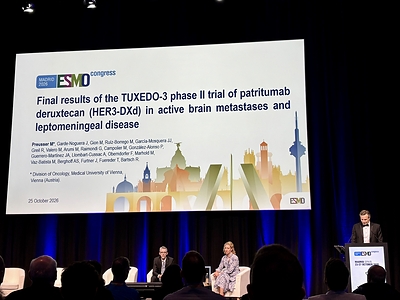

MEDSIR presents final TUXEDO-3 results highlighting the potential of patritumab deruxtecan in active brain metastases and leptomeningeal disease
PR Newswire
MADRID, Oct. 26, 2026
- The TUXEDO-3 study evaluates the efficacy of patritumab deruxtecan (HER3-DXd) for treating active brain metastases in patients with metastatic breast cancer and advanced non-small cell lung cancer, as well as leptomeningeal disease.
- Results presented by MEDSIR at ESMO 2026 Congress show promising activity for this drug, which could offer an alternative treatment for brain metastases in selected patients, addressing a major unmet medical need in a population that has traditionally faced a poor prognosis.
- At the congress, the company also presented the designs of the BEXAR and SATROPIN trials, which focus, respectively, on evaluating a potential new treatment for sarcoma and improving quality of life for patients with breast cancer.
MADRID, Oct. 26, 2026 /PRNewswire/ — MEDSIR, a leading international oncology research company, presented results from the TUXEDO-3 study during an oral session at ESMO 2026 scientific congress in Madrid. The study assesses the efficacy of the antibody-drug conjugate patritumab deruxtecan (HER3-DXd) in active brain metastases arising from metastatic breast cancer and advanced non-small cell lung cancer (NSCLC), as well as in leptomeningeal disease (LMD) caused by any solid tumor. The data presented at the congress underscore the potential of this treatment for brain metastases and LMD, complications that are typically associated with a poor prognosis.
TUXEDO-3: a potential new treatment approach for patients with a poor prognosis
TUXEDO-3 is a multicenter phase II clinical trial conducted at eight hospitals in Spain and Austria. It evaluates the activity of the antibody-drug conjugate patritumab deruxtecan in treating brain metastases across three cohorts. These cohorts include patients with active brain metastases arising from metastatic breast cancer and advanced non-small cell lung cancer (NSCLC), as well as patients with leptomeningeal disease (LMD) from advanced solid tumors, a condition caused by the spread of tumor cells to the brain and spinal cord.
The prognosis for patients with active brain metastases remains poor because the blood-brain barrier limits the ability of treatments to reach the brain. In addition, patients with central nervous system involvement are often underrepresented in clinical trials, leaving limited knowledge about brain metastases and LMD. Patritumab deruxtecan could offer an alternative treatment approach by combining an antibody targeting HER3 (a protein highly expressed in brain metastases from breast and lung cancers) with a chemotherapy payload. Together, these components can penetrate the brain and deliver treatment directly to tumor cells.
The overall survival results, presented by Dr. Matthias Preusser, co-principal investigator of TUXEDO-3 with Dr. Rupert Bartsch, demonstrated the drug’s potential as a new treatment strategy for these patients.
In the cohort of patients with active brain metastases arising from metastatic breast cancer, median overall survival was 7.9 months; among patients whose brain metastases arose from advanced NSCLC, it was 6.7 months. In the LMD cohort, median overall survival reached 10.5 months, a notable improvement over the approximately 2 to 6 months typically observed in this patient population.
“The results presented today at ESMO highlight the potential of patritumab deruxtecan for patients with brain metastases or leptomeningeal disease, where there remains a substantial need for effective treatments. These findings represent an important step forward expanding treatment options and support further clinical investigation,” said Dr. Preusser, co-principal investigator of the study.
BEXAR and SATROPIN: new treatment approaches for sarcoma and improved quality of life for patients with breast cancer
At ESMO, MEDSIR also presented posters outlining the designs of two new clinical trials: BEXAR and SATROPIN.
BEXAR is a phase Ib/II study to be conducted at six Spanish centers. It will assess whether adding bexmarilimab, an antibody targeting CLEVER-1, to standard chemotherapy (doxorubicin) can improve outcomes in patients with metastatic soft-tissue sarcoma. Phase Ib will evaluate safety and determine the recommended dose of bexmarilimab in combination with doxorubicin in 46 patients. Phase II will then assess efficacy in 232 patients, seeking a more effective therapeutic approach that could transform a standard of care used for more than four decades.
The company also presented the design of SATROPIN, an international phase II trial evaluating a strategy to reduce the toxicity associated with sacituzumab govitecan in patients with metastatic triple-negative and HR-positive/HER2-negative breast cancer. Specifically, the study is investigating atropine, a low-cost, widely available medicine administered before each treatment cycle, to reduce the incidence and severity of early-onset diarrhea, one of the most common adverse effects of sacituzumab govitecan. The study will assess whether this strategy can reduce the incidence of this adverse event and help prevent dose reductions, delays, or interruptions, potentially improving treatment tolerability and patients’ quality of life.
Artificial Intelligence: redefining the future of oncology
During the congress, the company organized a forum exploring how artificial intelligence (AI) is transforming clinical trial design, real-world data analysis, and medical decision-making. This latest edition of the MEDTALK event featured leading experts including, Dr. Arsela Prelaj of the Istituto Nazionale dei Tumori; Dr. Nadia Harbeck of LMU University Hospital; Dr. Enrique Grande of Hospital Universitario Quirónsalud de Pozuelo; Dr. Miriam Koopman of University Medical Center Utrecht; Dr. Loic Verlingue of Centre Léon Bérard; and Dr. Jonathan Lim of The Christie NHS Foundation Trust. During the discussion, the experts highlighted the opportunities, ethical challenges, and responsible adoption of AI to advance faster, more precise, and more personalized oncology research.
About MEDSIR
Founded in 2012, MEDSIR is distinguished by its close collaboration with strategic partners to drive innovation in oncology research. With headquarters in Europe (Spain), the United States and China, the company provides clinical trials design market oriented and scientific advisory, supported by an extensive global network of experts and integrated technology to streamline the process. The company offers support for proof‑of‑concept studies and a strategic approach that allows research partners to benefit from the best of both worlds: industry clinical research and investigator‑driven trials.
For more information: www.medsir.org
 View original content to download multimedia:https://www.prnewswire.com/news-releases/medsir-presents-final-tuxedo-3-results-highlighting-the-potential-of-patritumab-deruxtecan-in-active-brain-metastases-and-leptomeningeal-disease-302919288.html
SOURCE MEDSIR