NCL20 Announces GT20 Canada 2026 Caribbean Tournament Plans Ahead of 2028 Olympic Cricket Return
TORONTO, ON / ACCESS Newswire / October 19, 2026 / As the 2028 Olympics approach, Arun Agarwal's National Cricket
Press Release Disclaimer: This is a press release distributed through the XPR Media network. It has not been independently verified by our newsroom.
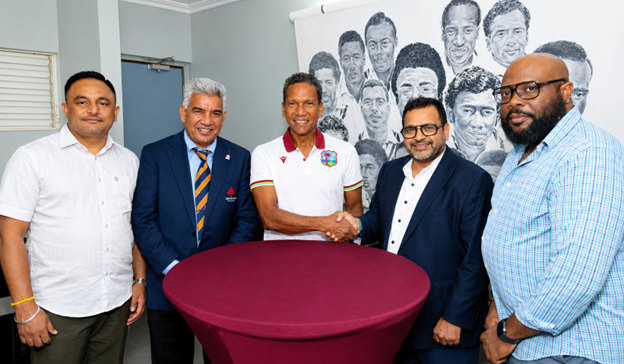

TORONTO, ON / ACCESS Newswire / October 19, 2026 / As the 2028 Olympics approach, Arun Agarwal’s National Cricket League is staging GT20 Canada in the Caribbean, after two years without a Canadian season and an ICC sanctioning setback in the U.S. Canadian players, local businesses and the City of Brampton are still waiting for the benefits of a homegrown professional league.
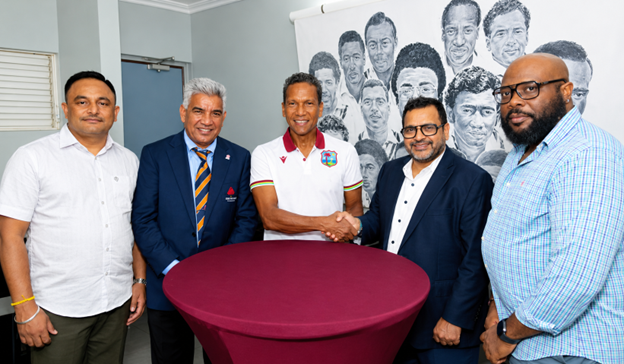
NCL20 announces that the 2026 edition of GT20 Canada will be held in St. Vincent and the Grenadines during the October-November window, rather than in a Canadian host city. As cricket prepares to return to the Olympic Games in Los Angeles in 2028, the announcement comes amid growing youth participation in Canada, increasing demand for professional cricket, and rising interest from international investors.
The National Cricket League (NCL), chaired by Dallas businessman Arun Agarwal, is behind the event. For a country still struggling to build venues, professional pathways, and a reliable domestic cricket economy, this is more than a disappointing change of location. The move raises questions about why the commercial value of a Canadian cricket property is being realized elsewhere and what NCL has delivered in return for the local cricket community.
Brampton, left in the dust
No community has more reason to ask that question than Brampton. The city calls itself the Cricket Capital of Canada and has spent years positioning itself as the sport’s home in North America, with roughly $10 million committed over two years to cricket facilities and a year-round venue opening at Earnscliffe Park.
On May 14, 2026, Mayor Patrick Brown and members of council stood alongside Mr. Agarwal at an official launch event in Brampton. The city announced that it would host the tournament from July 16 to August 1: six franchises, including a Brampton Blazers team, and 24 matches. In the city’s own release, Mr. Agarwal pledged to engage local vendors, hotels and restaurants and to contribute to economic growth in the community.
The matches never came. Brampton lent its name, its council and its civic credibility to the launch, and received none of the ticket sales, hotel nights, restaurant traffic or sponsor activation that a home tournament brings. It is the second straight summer the city has been promised professional cricket and gone without it.
A troubled U.S. record: unpaid vendors and an ICC rebuke
Canadian decision-makers did not have to guess how NCL operates. Its record in the United States was already on display.
NCL’s first Sixty Strikes tournament in Dallas in 2024 was dogged by reporting about playing surfaces, visa questions and tournament operations. The problems did not end when the matches did. Dallas broadcaster WFAA reported that vendors alleged NCL was months overdue on more than US$190,000 in payments following its fall tournament, claims the league described as unverified allegations. WFAA separately reported that NCL and Mr. Agarwal faced a lawsuit over unpaid invoices.
That matters for Canada. Mr. Agarwal stood in Brampton in May and promised to engage local vendors, hotels and restaurants. Businesses on both sides of the border are entitled to ask how vendors were treated the last time NCL staged a tournament.
More significantly, the International Cricket Council determined that the event breached a core sanctioning condition governing the number of qualifying players in teams’ playing XIs. In a November 7, 2024 letter, the ICC stated that as a result of this breach of our sanction, there will be no ICC sanction granted to this event in the future.
That decision applied to future editions of the U.S. event, not a personal lifetime ban on Mr. Agarwal. But it was a serious regulatory failure for an organization seeking to expand internationally. In 2026, ICC officials again questioned whether NCL’s previous record met the standards for international approval of a proposed Canadian event. Whether the Caribbean edition now has every required approval is a question the governing bodies should answer publicly.
Six teams promised. Five announced. Two years without a Canadian season.
The licence Cricket Canada granted NCL is a licence to operate a professional T20 league in Canada. The arrangement contemplated at least six franchises and a substantial financial commitment to Canadian cricket. For the 2026 season alone, NCL’s payment obligations, covering licence fees, development funding, a dedicated purse for Canadian players and a signing bonus, total roughly US$2.87 million.
The record so far: no Canadian season in 2025. No Canadian season in 2026. The 2026 competition has five announced teams and will be played entirely outside the country. For two consecutive years, the exclusive rights to Canada’s top professional T20 competition have sat with an operator that has not staged a match here, and the sport has been held in place for that entire time.
That raises an obvious question. Several groups have said they are willing and able to play professional cricket in Canada.
- “Why is a relocation to the West Indies being prioritized over them?”
- The public deserves a straightforward accounting: “Has the roughly US$2.87 million committed for 2026 been paid? Were Canadian-player opportunities and salaries protected?”
- “Who authorized a smaller, offshore event under a Canadian licence?”
A struggling West Indies board finds money for someone else’s league
Cricket West Indies (CWI) is not a neutral host. Under the announced framework, CWI will handle governance, compliance and regulatory coordination, and will also hold a direct franchise investment in the tournament.
That commitment comes at a remarkable moment. CWI has projected a net loss of about US$26 million for 2026, after revenue for the year ending September 2025 fell 54 per cent. In July, the ICC approved a US$12.82 million loan to help stabilize the board. And on September 25, the same day the Caribbean edition of GT20 Canada was announced, CWI cut international players’ retainer fees by 25 per cent, shortened domestic contracts from twelve months to seven, and suspended the men’s Super50 and the women’s T20 Blaze.
West Indies captain Shai Hope has warned publicly that the pay cuts could drive young players away from the game. Caribbean stakeholders are entitled to ask why a board cutting its own players’ pay and cancelling its own domestic competitions is investing resources in a franchise of another country’s league, run by an operator the ICC has already sanctioned once.
Millions left on the table for players
The most direct cost of this impasse falls on the players. A full six-team season under the NCL arrangement was structured around roughly US$3 million in player purses, with about US$1 million of that earmarked for Canadian players. With no 2025 season, and a downsized 2026 edition played offshore, Canadian cricketers have seen little of that money reach them.
And that is the floor, not the ceiling. Had an ICC-grade operator been running GT20 and paying full freight, Canadian players would also have been drawing the benefits that come with a sanctioned, internationally credible pathway. Established ICC-sanctioned franchise leagues in North America operate with team salary caps above US$1 million, with top domestic contracts reaching US$75,000 a season. Add the production crews, venues, hotels, caterers, security firms and event staff who are paid when a tournament is held at home, and the combined loss to Canadian players and vendors runs well into the millions.
That is why player payments need full transparency. The arrangement set aside dedicated compensation for Canadian players, yet two years have passed without a Canadian season. If that money been paid and to whom, and on what terms.
The ownership of the franchises participating in the Caribbean edition and the assurances in place to ensure players are paid in full and on time remain important concerns. Given the operator’s record of payment disputes in the United States and an ICC finding related to player rules, transparency is essential. NCL and Cricket Canada should publish details of payments made to players, any outstanding amounts, and the steps being taken to meet their obligations to Canadian players.
Canadian cricketers are trying to become true professionals. Every season lost to dispute is a season of income, exposure and development they do not get back.
Better options are waiting. Why is this one still at the centre.
Multiple ICC-grade operators have explored professional cricket in Canada, with proposals tied to meaningful commercial investment, more paid opportunities for Canadian cricketers, recurring matches and a broader Brampton sports-infrastructure vision. The Brampton stadium ambition has most credibly been framed at around $100 million, a realistic figure for a venue built to international standards.
Canada’s peers are showing it can be done. On October 16, the Cricket Association of Nepal announced that the ICC had sanctioned the third edition of the Nepal Premier League, which starts later this month. The European T20 Premier League, run with the Associate boards of Scotland and the Netherlands alongside Cricket Ireland, secured ICC sanction and staged its inaugural season this summer, with franchise owners including Rahul Dravid, Steve Waugh and Faf du Plessis. Smaller cricket nations are building sanctioned leagues that attract serious owners. Canada, with more options than most, is settling for a property without approval.
These options are not marginally better. They come with ICC approval, and that approval changes what is possible. A sanctioned league can field a full complement of international stars, which is what draws broadcasters, sponsors and crowds. More importantly, it is the threshold for institutional capital. Serious investors, franchise groups and lenders will not commit long-term money to a property that cannot secure the sport’s basic credential.
That capital is exactly what Canada lacks. The country still has no purpose-built international cricket stadium, high-performance centres are scarce, and community demand for pitches outstrips supply in Brampton and across the country. A credible, ICC-approved professional league is the kind of anchor tenant that turns stadium plans into financed projects and brings private money to sit alongside public investment. An unsanctioned property with a record of missed seasons does the opposite.
Tier-one international cricket properties are looking for an investible environment: one where ICC-quality operators want to enter the market, and one where the governing board’s decisions can be trusted. That is the standard Canada should be measured against. It is fair to ask why a property that has not staged a Canadian match in two years continues to sit at the centre of Canada’s professional cricket footprint while sanctioned alternatives wait.
The questions that need answers
Mr. Agarwal and NCL should be asked directly: “Why move a Canadian league to another cricket market? How much has actually been invested in Canadian facilities, players and development? What has been paid, what remains outstanding, and when will a full Canadian season be delivered?”
Cricket Canada must explain the original selection, the changes to the tournament, the status of the commercial arrangement and whether it is free to pursue alternatives. The ICC and CWI should make the applicable sanctioning position clear, and CWI should explain the scale and terms of its franchise investment. Sport Canada should explain what oversight applies where national sporting opportunities may be affected. And the City of Brampton deserves an explanation of what happened to the tournament it helped launch.
Canadian cricket has the players, the fans, the host cities and interested investors. What it needs now is a professional league that is played in Canada and run to international standards, along with clear answers from the bodies responsible for making that happen.
About NCL20
NCL20 is the organizer of GT20 Canada, a professional T20 cricket league bringing together Canadian talent and international cricket stars to promote the growth of cricket across North America.
Media Contact
NCL20
info@ncl20.com
SOURCE: NCL20
View the original press release on ACCESS Newswire